
Introduction
Imagine this: A prospective customer calls your company during peak hours. Instead of being welcomed by a professional auto-attendant and transferred to the appropriate department, the call rings eternally or is dropped. The outcome? A missed opportunity and a frustrated prospect.
With increased demands on communication, being responsive without an organized call management system is almost impossible.
This is where PBX makes a difference; PBX business communications get centralized through the ability of teams to manage internal and external calls through a unified interface. It allows businesses to handle call flows, automate routing, and integrate advanced features such as call analytics, conferencing, and voicemail management. We are living in an environment where responsiveness is the biggest factor in building brand credibility, and PBX makes your business always connected, agile, and future-proof. In this blog, we’ll delve into what PBX is and discuss its potential to bring scalability, handle remote workforces, and provide seamless customer experiences across channels.
What is a PBX?
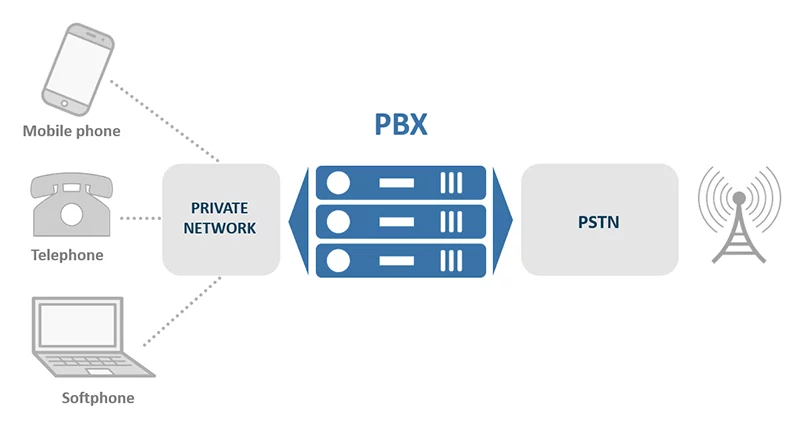
PBX (Private Branch Exchange) is a business phone system that manages calls within a company. It allows employees to call one another with extensions and effectively routes incoming and outgoing calls. Rather than giving every user his or her own telephone line, PBX shares lines and provides features such as call transfer, voicemail, and conference calls.
How a PBX Phone System Works
-
Call Initiation: An employee picks up their internal phone or dials an external number.
-
Routing: The PBX system identifies whether the call is internal (within the company) or external (outside lines).
-
Connection: Internal calls are directly connected; external calls are passed through existing phone lines or VoIP gateways.
-
Features Applied: The system is capable of applying features like call transfer, voicemail, conference calling, or auto-attendants.
-
Call Termination: When the call ends, the PBX releases the line for the next call.
Benefits of PBX Systems
By integrating multiple lines of communication and centralizing call handling, PBX systems automate workflows, enhance response times, and lower operational expenses. Some of the main benefits are:
Call Management
PBX systems make call handling easy by routing, prioritizing, and managing multiple calls in an effective way. This prevents missing critical calls and enhances overall organizational responsiveness.
Call Transfer
Employees can easily transfer calls from one extension, department, or office to another, ensuring uninterrupted communication and reducing wait time for customers and co-workers.
Multi-Location Connectivity
PBX allows business entities with multiple offices or remote employees to consolidate internal telephone systems into one network, creating a consistent communication platform across different locations.
Unified Communications
Modern PBX systems bring together voice, messaging, video conferencing, and collaboration software under one roof, allowing employees to communicate more efficiently across multiple media.
Cost Savings
With shared lines, VoIP technology, and centralized call treatment, PBX systems conserve telephony expenses, reduce long-distance charges, and eliminate the cost of stand-alone telephone systems in each office.
Types of PBX Phone Systems
PBX manages internal and external calls, provides advanced communications capabilities, and may be deployed on-premises, in the cloud, or in a hybrid deployment. The key types are:
-
Hosted PBX: It eliminates on-site hardware requirements, provides scalability, and offers advanced functions such as voicemail-to-email, call routing, and conferencing.
-
On-Premises PBX Systems: Hosted and supported within the organization’s internal infrastructure. It provides complete control of the system, personalized settings, and might be chosen by businesses with certain security or compliance needs.
-
Hybrid PBX: Combines elements of hosted and on-premises systems. It allows businesses to keep some control in-house while leveraging cloud capabilities for scalability, remote access, and reduced infrastructure costs.
Is a PBX Phone System Right for Your Business? – Self-Assessment
Ask yourself the following questions:
-
Do you handle a high volume of internal or external calls daily?
-
Do you have multiple staff members, departments, or office locations that require smooth communication?
-
Are you interested in combining voicemail, call transfers, conferencing, or unified communications?
-
Do you want to reduce telephony costs while improving efficiency and scalability?
-
Is your team open to adopting cloud-based, on-premises, or hybrid phone technology?
If most of the answers are Yes, you need a cloud PBX system that can significantly streamline communication, improve productivity, and enhance customer and team experiences.
What to Look for in a PBX System
1. Deployment Type
Assess whether a hosted, on-premises, or hybrid PBX will fit your company. Hosted minimizes IT burden and provides remote connectivity, on-premises provides maximum control and customization, and hybrid is a mix of the two for flexibility and scalability.
2. Features & Functionality
Evaluate the system’s capabilities, such as call routing, voicemail, transfers, conferencing, and unified communications. Consider advanced features like CRM integration, call analytics, or mobile apps to ensure it meets both current and future communication needs.
3. Scalability & Flexibility
The PBX must expand as your company does. Opt for systems that permit additional users, extensions, or locations without cumbersome upgrades. Flexible solutions are essential for seasonal needs or growing teams.
4. Integration Capabilities
Examine whether the PBX integrates with CRM, helpdesk, or collaboration platforms. Integration ensures smooth workflows, accurate data, and efficient customer interactions.
5. Reliability & Uptime
A PBX must provide uninterrupted service. Check for redundancy, failover options, and strong support to prevent downtime and ensure smooth daily operations.
6. Security & Compliance
Make sure calls and data are secure and the system meets regulatory standards for your industry, protecting sensitive information and maintaining continuous compliance.
7. User Experience
An easy-to-use interface minimizes training time and mistakes. Think about how simple it is for employees to make a transfer, handle voicemails, or access mobile features.
8. Cost & ROI
Balance total costs, including installation, maintenance, and service fees, against long-term system savings. Seek a balance between initial investment and continuous operational efficiency.
Why choose TeleCMI as your PBX system?
TeleCMI is one of the top cloud-hosted PBX solutions, providing businesses with a powerful and scalable communications platform. Here’s why you should use TeleCMI for your company:
-
Secure voice and messaging in 85+ countries.
-
400 + smart calling and analytics.
-
Live team activity and call detail access.
-
Unified communications to simplify operations.
-
Rapid installation with no hardware costs.
-
99.99% uptime with disaster recovery included.
-
Flexible pay-as-you-go price plan.
Conclusion
By centralizing call management, enabling seamless collaboration, and integrating advanced features, PBX empowers businesses to improve responsiveness, efficiency, and customer experience. Whether the model is hosted, on-premises, or hybrid, choosing the correct PBX for your business ensures scalability, reliability, and capabilities. With TeleCMI, you can access a robust, cloud-based solution that provides worldwide connectivity, unified communications, real-time analytics, and uncompromising reliability.
Key Takeaways
-
PBX streamlines internal and external communication, reducing missed calls and delays.
-
Hosted, on-premises, and hybrid systems allow businesses to choose the setup that fits their size, needs, and budget.
-
Features like call transfer, conferencing, voicemail, and unified communications improve team coordination and customer experience.
-
PBX systems grow with your business and integrate with CRM, helpdesk, and collaboration tools for seamless workflows.
-
High uptime, secure connections, and regulatory compliance keep communications consistent and protected.
-
Shared lines, VoIP, and centralized management reduce telephony expenses and operational overhead.
-
Cloud-based, globally connected, analytics-driven, and easy to deploy, making communication agile, insightful, and future-ready.