
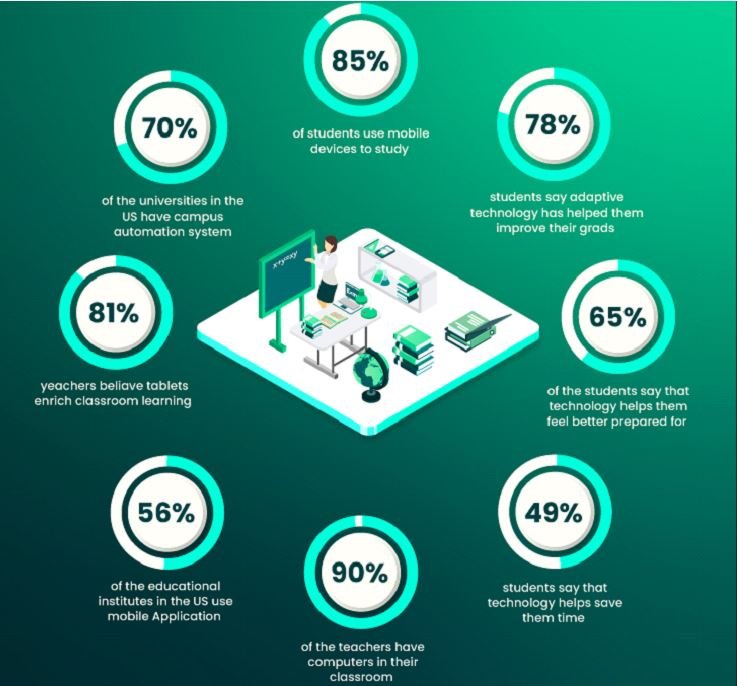
Education has transformed an entire era with modern technological progress. Education technology, once a minimal facilitator, has changed how we learn, interact, and teach in schools. It is changing the traditional learning procedures and making new ways for future readiness and educational inclusivity.
The journey through this transformation reveals the great potential and different educational challenges because of technology. The advancement has set the learning stage for the never-ending growth of learning boundaries. The world is shifting towards all digital things quickly. In this blog, we will explore the transformative role of technology in modernizing education.
Challenges & Benefits Of Using Technology In Education:
In recent years, we have observed an important shift toward online learning. This revolution, boosted by global events like the COVID-19 pandemic, has both advantages and challenges. Online education has extended access to learning opportunities, going beyond geographical boundaries. It provides flexibility for learners of every age group, letting them balance work with education, family, and other communities. However, it also comes with several challenges, such as the digital divide and the high need to modify traditional teaching procedures to the online environment.
As we observed, the entire educational system shifted online at the time of the pandemic, and even now, most institutes are conducting online classes or assigning homework tasks on the institute’s online portals. In the same way, there has been an increase in the number of online assignment help providers. If you have tricky and complicated assignments, you can search for assistance according to your region. For instance, if you are an Emirati, then search for UAE assignment help, and you will get a list of service providers working in your region.
Customized Learning Experiences Offered By Technology
One of the most awaited technology trends in education is the ability to customize learning experiences, and here is how it works.
- Adaptive Learning Algorithm:
Modern algorithms analyze student progress, recognizing weaknesses and strengths to strongly adjust the syllabus of personalized learning.
- Tailored Content:
Identifying broad learning requirements, educators give personalized content, catering to the need for extra support and high achievers.
- Individualized Pacing:
Technology allows students to learn at their own pace, encouraging in-depth understanding and exploration without the limitation of uniform classroom deadlines.
- Constant Assessment:
Real-time monitoring lets educators offer timely support when students come across challenges, making sure about ongoing progress.
- Improved Engagement:
Customized learning, driven by technology, accelerates student enthusiasm and motivation by providing engaging and relevant content that positively impacts academic performance.
Advanced Tools & Solutions For Modern Education:
The top trends in educational technology incorporate the following tools:
- Webinars:
Webinars are like live seminars that create an environment for real-time interaction between learners and educators. This usually features polls, chats, and Q&A sessions.
- Learning Management Systems:
LMS platforms like Blackboard, canvas, and Moodle facilitate the delivery of content, courses, assessments, and assignments in a concentrated digital environment.
- Interactive Apps:
Educational app development comes in different forms, incorporating interactive quizzes, simulation tools, and flashcards that engage students in learning through connectivity
- Virtual Reality and Augmented Reality:
VR and AR technologies make immersive learning experiences, allowing students to discover subjects in augmented and 3D environments.
- Digital Textbooks:
Digital textbooks provide a richer multi-media and dynamic learning experience than traditional printed textbooks. They mostly include interactive exercises, animations, and videos.
- Artificial Intelligence:
Personalized AI-powered platforms can offer customized recommendations, evaluate student performance, and provide adaptive learning experiences.
- Analytics Tools and Big Data:
Data analytics solutions like Power BI and Tableau help educational institutions analyze and collect data to enhance learning and teaching outcomes. .
- Video Conferencing Tools:
Platforms like Microsoft Teams and Zoom allow audio communication and real-time video, making virtual classrooms and remote learning possible.
- Collaboration Tools:
Tools like Google Workspace and Microsoft Office 365 offer shared calendars, cloud storage, communication, and facilitating group projects.
- Gamification Platforms:
Gamification platforms and tools Quizlet and Kahoot use game-like elements to make games more fun and engaging, specifically for young learners.
- Podcast:
Educational podcasts offer audio content on a broad range of topics, letting learners ingest information on the go.
- Simulation:
Virtual labs and simulations, like those used in engineering and science courses, offer interactive experiences in a digital environment. Also, if you are looking for help in complex courses like CIPD, then agencies for CIPD Assignment Help in Dubai are providing students with exquisite help. Ask them, and they will help you answer your difficult questions.
- Collaboration & Cloud based storage:
Cloud platforms such as Google Drive and Dropbox provide simple access to facilitate and document collective work on projects.
Let us Conclude:
So, this is all about how innovative technology is transforming the learning experiences, providing extraordinary possibilities for inclusive and engaging learning experiences. Grabbing these technological changes ensures a brighter environment. For professional guidance on the top trends in educational technology, you can contact reliable agencies that offer assistance in technology-related academics. We hope we have shared enough information on how the future of customs education is leveraging technology.