

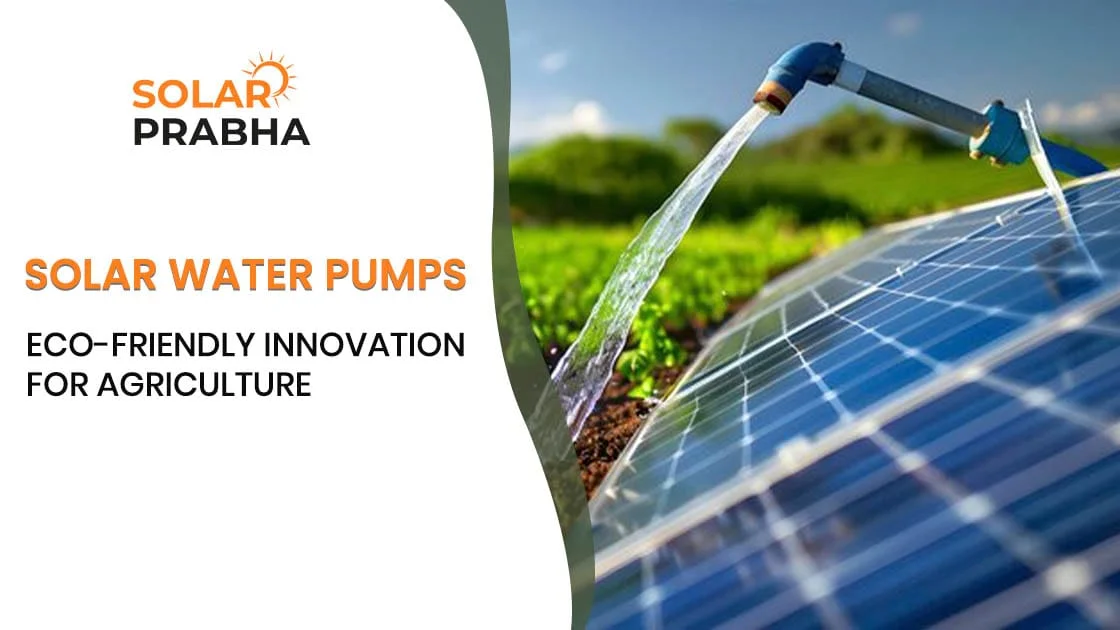
Agriculture is the backbone of rural life in India, and water is one of the most important resources for farming. Farmers depend on water for irrigation, livestock care, and other daily agricultural activities. But many farms still face challenges like lack of electricity, high diesel costs, and irregular water supply. Because of these problems, farmers are now searching for better, more reliable, and affordable options. One such modern and effective solution is solar-powered irrigation. Over the years, solar technology has become more affordable and accessible, making it easier for farmers to shift towards clean energy systems that work all year long.
In this context, solar water pumps are becoming extremely popular among farmers. These pumps use sunlight to draw water from wells, rivers, ponds, or borewells and help farmers irrigate their fields without depending on expensive diesel or unreliable grid electricity. With increasing awareness and government support, solar pumps are now seen as a long-term investment for sustainable farming. They not only reduce operational costs but also support green energy usage, which is good for the environment and future generations.
Read also: 5 Strategies for Thriving Cell Phone Repair Businesses
1. What Are Solar Water Pumps?
Solar water pumps are machines that run on electricity generated from solar panels. These panels convert sunlight into energy, which powers the motor and helps lift water from a source. Unlike traditional pumps that run on diesel or electricity, solar pumps rely purely on solar energy. They can work in remote places where there is no electricity connection, making them ideal for rural farms.
A basic solar water pumping system includes:
-
Solar panels
-
Pump controller
-
DC or AC water pump
-
Mounting structure
-
Pipes and wires
The system automatically starts in the morning as sunlight becomes available and stops when the sunlight reduces in the evening. This makes solar pumps very convenient and low-maintenance compared to other water pumping methods.
2. How Do Solar Water Pumps Work?
The working process of a solar water pump is simple and efficient:
-
Absorbing Sunlight:
Solar panels are placed in an open area where they receive maximum sunlight. The panels absorb the sun’s energy and convert it into electrical power. -
Converting and Controlling Power:
The electricity produced goes through a controller. This device makes sure the pump gets the correct voltage and protects it from any electrical issues. -
Water Pumping:
The pump uses this electricity to lift water from a borewell, river, pond, or tank. It then pushes the water to storage tanks, fields, or drip irrigation systems. -
Automatic Operation:
Solar pumps work directly when sunlight is available and need no manual intervention. Some advanced models offer remote monitoring, automatic start-stop, and flow control features.
This simple mechanism makes solar pumps dependable even in low-income or remote farming areas.
3. Types of Solar Water Pumps
There are mainly two types of solar pumps used in agriculture. Each type works differently and suits different water levels and farm sizes.
a. DC Solar Pumps
DC pumps run on direct current (DC) generated by solar panels. They are energy-efficient and ideal for small to medium farms. They also start easily in low sunlight conditions.
Best for:
-
Small to medium farms
-
Borewells with shallow depths
-
Places with moderate water needs
b. AC Solar Pumps
AC pumps use alternating current (AC) with the help of an inverter. These pumps are suitable for large fields and deeper borewells as they can handle higher loads.
Best for:
-
Large farms
-
Deep borewells
-
Higher water demand
4. Benefits of Using Solar Water Pumps
Solar pumps offer multiple advantages, especially for farmers who struggle with high irrigation costs or unreliable electricity.
a. Zero Fuel Cost
Since solar pumps use sunlight, farmers do not have to spend money on diesel or grid electricity. Once installed, the system provides free energy for many years.
b. Low Maintenance
Solar pumps have fewer moving parts compared to diesel pumps. They do not require constant oiling, fuel refilling, or part replacements. This reduces maintenance efforts and costs.
c. Eco-Friendly
Solar energy does not create pollution. Using solar-powered pumps helps protect the environment by reducing carbon emissions and saving fossil fuels.
d. Suitable for Remote Areas
In many villages, power supply is irregular or unavailable. Solar pumps work in any location where sunlight is available, making them perfect for remote farms.
e. Long Lifespan
Good-quality solar panels can last 20–25 years. Pumps too can run for many years with minimal care. This makes the investment worthwhile in the long run.
f. Weather-Friendly Operation
Solar pumps work best during the day when farmers need water the most. Even during cloudy days, they can run, though at reduced efficiency.
g. Supports Multiple Irrigation Methods
These pumps can be used with drip irrigation, sprinklers, flood irrigation, and water storage tanks. This flexibility helps farmers choose the best irrigation method for their crops.
5. Applications of Solar Water Pumps in Farming
Solar water pumps serve many purposes in agriculture and rural life.
a. Irrigation of Fields
The most common use is irrigation. Solar pumps help deliver water consistently to crop fields. This ensures better crop growth and reduces stress on farmers during dry seasons.
b. Drip and Sprinkler Systems
Solar pumps supply steady water flow that works perfectly with micro-irrigation systems. These systems save water and increase crop yield.
c. Livestock Water Supply
Farmers with cattle, poultry, or goats can use solar pumps to fill water troughs, tanks, and ponds.
d. Aquaculture and Fish Ponds
Solar pumps can fill fish ponds, circulate water, and help maintain water quality.
e. Household Use in Rural Areas
Many rural households use solar pumps to draw drinking water because of their reliability and low running cost.
6. Factors to Consider Before Choosing a Solar Water Pump
While solar pumps offer many advantages, choosing the correct system depends on a few important factors.
a. Water Source Type
Is the water coming from a borewell, pond, river, or tank? Borewell pumps need more power compared to surface pumps.
b. Water Depth
The deeper the water level, the stronger the pump required.
c. Daily Water Requirement
Farmers should estimate how much water they need daily for crops, livestock, or household use.
d. Farm Size
Large farms may need higher capacity pumps, while small farms can manage with lower capacity ones.
e. Solar Panel Capacity
Choosing the right panel size ensures the pump works smoothly throughout the day.
f. Budget and Subsidies
Farmers should check government subsidies and financial support to reduce installation costs.
7. Government Subsidies and Support for Solar Pumps
The Indian government encourages farmers to use solar energy by offering subsidies and financial assistance. Under programs like PM-KUSUM, farmers can get significant support for installing solar pumps at reduced rates.
Some key benefits under these schemes include:
-
Financial assistance for farmers
-
Reduced upfront cost
-
Support for both grid-connected and off-grid pumps
-
Encouragement for clean energy usage
Farmers can contact local agriculture departments or renewable energy agencies to get more information about available schemes.
8. Maintenance Tips for Solar Water Pumps
Even though solar pumps require low maintenance, a few simple steps can help increase their lifespan:
-
Clean solar panels regularly to remove dust and maintain efficiency
-
Check wiring and connections to ensure smooth operation
-
Flush pumps occasionally to prevent blockages
-
Keep the mounting structure stable
-
Protect panels from shade caused by trees or buildings
Following these simple steps will ensure long-lasting performance.
9. Why Solar Water Pumps Are Ideal for Modern Farming
Today’s agriculture needs reliable, affordable, and sustainable solutions. Solar pumps fulfill all these requirements. Farmers do not have to worry about rising diesel prices, power cuts, or monthly electricity bills. The system works independently, reduces costs, and supports environmentally friendly practices.
As climate change increases water scarcity, solar pumps help farmers use water efficiently and manage irrigation wisely. They can be integrated with smart irrigation systems to provide better control over farming activities. With increasing technology development, solar pumping systems are becoming more efficient, affordable, and farmer-friendly.
Conclusion
Solar water pumps are proving to be a dependable, cost-effective, and eco-friendly choice for farmers across India. They reduce daily expenses, provide uninterrupted water supply, and support sustainable agriculture. By adopting solar-powered irrigation, farmers can improve crop production and secure long-term benefits. For those looking to choose the right system and get trusted guidance, Solar Prabha offers quality solutions that support modern farming needs with ease and reliability.